
Your electric bike is more than just a means of transportation—it's an investment in cleaner, smarter, and more affordable mobility.
Like any vehicle, proper maintenance plays a major role in its performance, safety, reliability, and long-term lifespan.
From Nigeria's dusty Harmattan conditions to heavy rainfall and rough roads, your e-bike faces environmental challenges that make regular care especially important.
Here are some essential habits that can help keep your electric bike performing at its best.
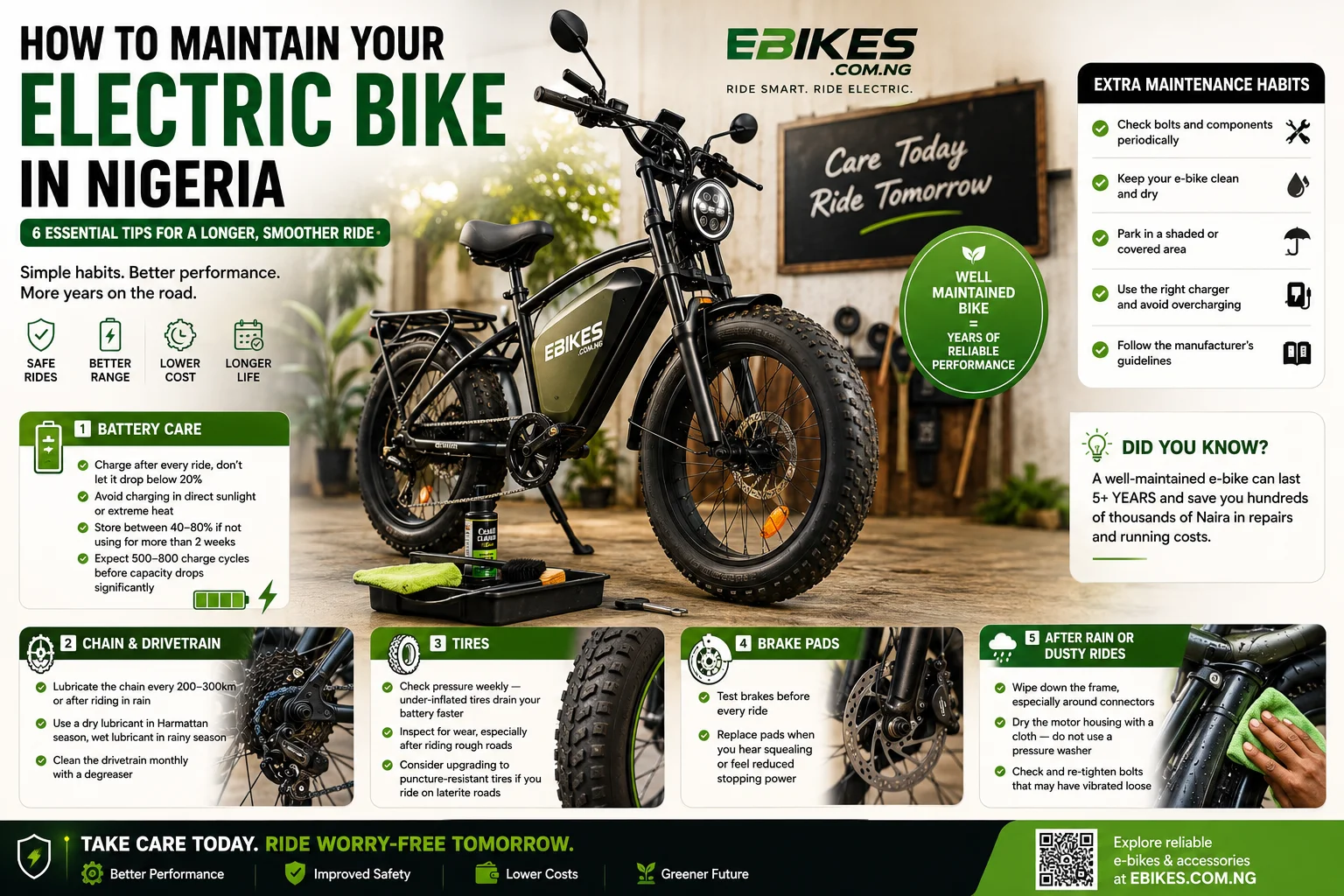
1. Take Good Care of Your E-Bike Battery
The battery is one of the most valuable components of your electric bike, so good charging and storage habits matter.
Follow these battery care habits:
- Recharge the battery when necessary and avoid regularly running it completely flat.
- Where practical, avoid allowing the battery to remain at a very low state of charge for extended periods.
- Avoid charging in direct sunlight or extreme heat.
- Allow an excessively hot battery to cool before charging.
- If you won't be using your e-bike for several weeks, store the battery at a moderate charge level—subject to the manufacturer's recommendations.
- Store the battery in a cool, dry location.
Many lithium-ion e-bike batteries are designed for hundreds of charge cycles, but actual lifespan depends on battery chemistry, charging habits, temperature, usage, and battery quality.
Important: Always follow the charging and storage instructions provided for your specific EBIKES.COM.NG model and battery.
2. Keep Your Chain and Drivetrain Clean
A clean drivetrain improves efficiency and helps reduce unnecessary wear. Over time, dust, sand, water, and road debris can accumulate on your:
- Chain
- Cassette or rear sprockets
- Chainring
- Derailleur components
Recommended maintenance habits
- Lubricate the chain regularly, especially after wet or particularly dusty rides.
- Clean accumulated dirt from the drivetrain before applying fresh lubricant.
- Use an appropriate bicycle chain lubricant for the riding conditions.
- Wipe away excess lubricant to prevent it from attracting unnecessary dust and dirt.
- Inspect the chain regularly for rust, wear, or stiffness.
For riders covering long distances, checking the drivetrain every few hundred kilometres can be a useful maintenance routine.
Harmattan tip
During dusty conditions, keeping excess lubricant off the outside of the chain can help prevent dust from building up.
Rainy-season tip
After riding in wet conditions, dry the chain and drivetrain before applying appropriate lubrication.
3. Check Your Tires Regularly
Your tires affect more than just comfort. Incorrect tire pressure can affect:
- Riding efficiency
- Handling
- Traction
- Range
- Tire wear
Under-inflated tires can increase rolling resistance, meaning your motor may need more energy to move the bike.
Make it a weekly habit to:
- Check tire pressure.
- Inspect the tire surface for cuts, cracks, embedded objects, or excessive wear.
- Check the sidewalls for damage.
- Ensure the tires are inflated within the pressure range specified on the tire or in your bike documentation.
If you frequently ride on rough or debris-filled roads, puncture-resistant tires may be worth considering where compatible with your e-bike.
4. Don't Ignore Your Brakes
Your brakes are one of the most important safety systems on your electric bike. Before riding, take a moment to confirm that the brakes feel responsive and watch out for signs such as:
- Reduced stopping performance
- Excessive brake lever travel
- Unusual noises
- Visible wear on brake pads
A rubbing or dragging brake
Squealing alone does not always mean your brake pads need immediate replacement—it can also be caused by dirt, moisture, glazing, or other issues. However, reduced stopping power or visibly worn pads should be inspected promptly.
When in doubt, have the braking system checked by a qualified technician.
5. After Riding in Rain or Dust
Nigeria's weather can be unpredictable. After a particularly wet or dusty ride, give your e-bike some extra attention by doing the following:
- Wipe down the frame with a soft cloth.
- Carefully clean around electrical connectors without forcing water into them.
- Dry exposed areas around the motor and battery compartment.
- Check the drivetrain for dirt or moisture.
- Inspect visible bolts and fittings for looseness.
- Ensure the charging port and battery contacts are dry before charging.
Avoid this:
Do not use a high-pressure washer directly on your e-bike. High-pressure water can force moisture into bearings, seals, connectors, and electrical components. A gentle wipe-down and appropriate low-pressure cleaning method are generally safer.
6. Check Bolts and Components Periodically
Rough roads and regular vibration can gradually affect fasteners and components.
Periodically inspect:
- Handlebars
- Stem
- Pedals
- Rack and carrier mounts
- Fenders
- Wheel fasteners
- Accessories
If anything feels loose, rattles, or moves unexpectedly, inspect it before continuing to ride.
Avoid overtightening critical components. Where torque specifications apply, they should be followed.
A Simple E-Bike Maintenance Routine
Before every ride
✓ Check the brakes
✓ Check the tires visually
✓ Confirm the battery is properly secured
✓ Look for anything loose or damaged
Weekly
✓ Check tire pressure
✓ Inspect the chain
✓ Wipe away accumulated dirt
✓ Check lights and electrical functions
Monthly
✓ Perform a more thorough drivetrain inspection
✓ Check brake pad condition
✓ Inspect bolts and accessories
✓ Look for signs of tire wear
After rain or heavy dust
✓ Wipe down the bike
✓ Dry sensitive areas
✓ Clean and lubricate the drivetrain when necessary
✓ Inspect connectors and moving components


![Electric Bikes vs Okada in Nigeria: Which Is Cheaper? [Real Cost Comparison]](https://yceztqytlxududahwexm.supabase.co/storage/v1/object/public/site-assets/blog/1787574307586-cdjubrf98ir.webp)